
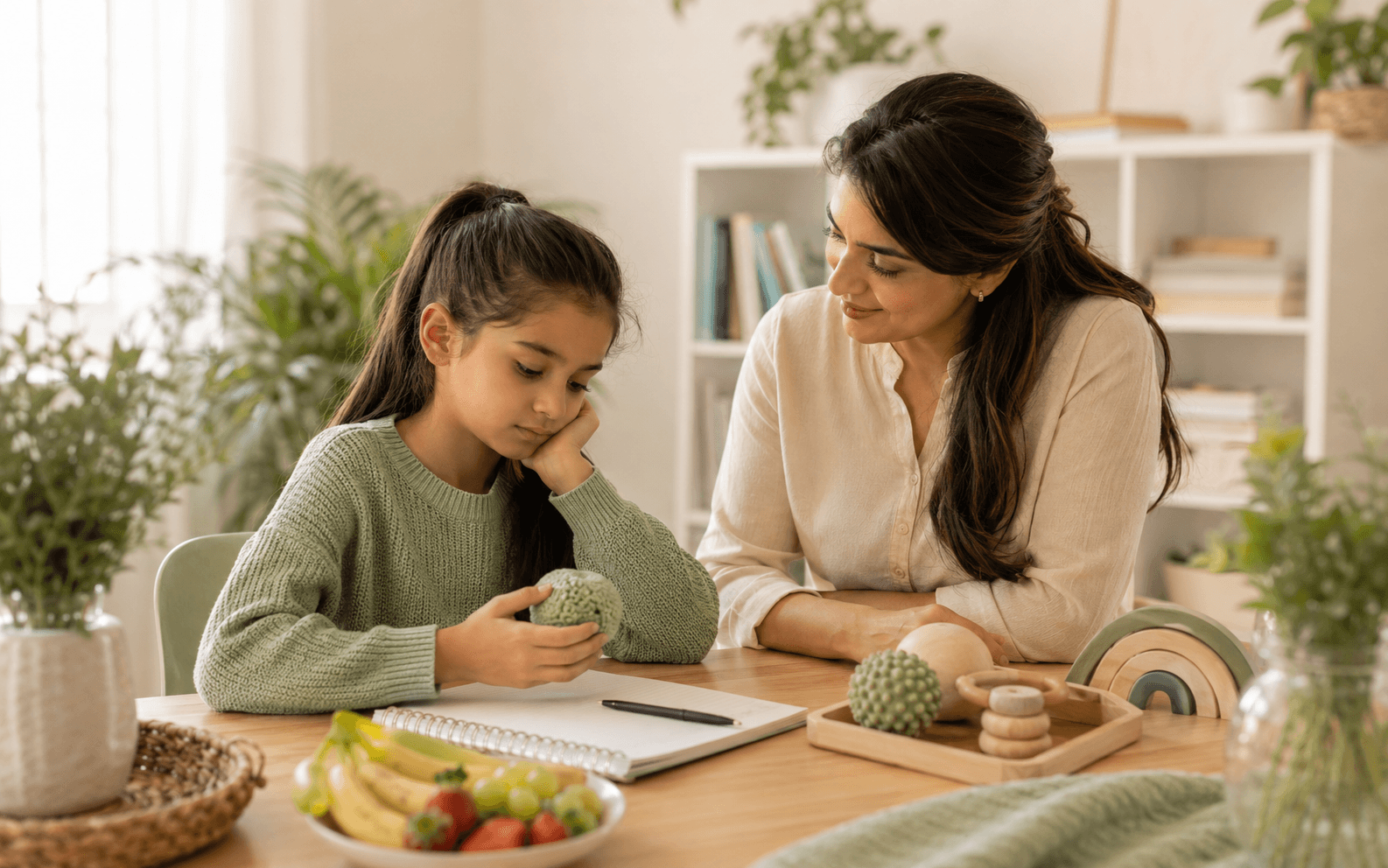
She does not look autistic
A phrase many girls hear for years
Many women who receive an autism diagnosis in their 20s, 30s, 40s, or even later share a similar story: I always felt different, but nobody realized I was autistic.
For decades, autism was largely studied based on how it appeared in boys. As a result, many girls with autism developed coping strategies that helped them blend in socially, causing their struggles to go unnoticed.
Today, researchers and clinicians are recognizing that autism can present differently in girls than in boys. Understanding these differences may help parents, teachers, and healthcare professionals identify children who might otherwise be overlooked.
This article explores why autism in girls is often missed, the concept of masking, common signs parents should know, and how a whole-child approach, including nutrition, lifestyle, and individualized homeopathic assessment, may help families better understand their child's needs.
Historical blind spot
Why autism was historically underdiagnosed in girls
For many years, the typical autism profile was based primarily on studies involving boys.
Common signs included:
- Obvious repetitive behaviors
- Limited social interest
- Significant communication challenges
- Visible sensory difficulties
Many girls, however, may present differently.
Instead of appearing socially disconnected, they may desperately want friendships but struggle to maintain them. Instead of obvious repetitive behaviors, they may develop intense interests that appear socially acceptable. Because of these differences, many girls did not fit the traditional autism stereotype.
As a result, they were often labeled as:
- Shy
- Sensitive
- Introverted
- Perfectionistic
- Anxious
- Emotionally intense
The underlying autism traits sometimes remained hidden for years.
Masking
The power of masking: why girls learn to hide their struggles
One of the most important concepts in female autism research is called masking, or camouflaging.
Masking refers to consciously or unconsciously copying social behaviors to fit in. Many autistic girls learn to:
- Mimic facial expressions
- Rehearse conversations
- Observe social rules carefully
- Copy peers' behaviour
- Hide sensory discomfort
From the outside, they may appear socially successful. Inside, however, social situations can feel exhausting.
Many women diagnosed later in life describe spending years studying social interactions like a script rather than experiencing them naturally. This effort can be mentally and emotionally draining.
Whole-child view
Looking beyond behavior
Autism affects much more than social communication and behavior. Many families notice challenges that extend into other areas of a child's daily life, including sleep, digestion, food preferences, anxiety, emotional regulation, and sensory processing.
For example, a child may struggle with falling asleep, experience frequent digestive discomfort, become overwhelmed in noisy environments, or have difficulty managing strong emotions. These challenges can affect overall well-being and quality of life.
This is why many healthcare professionals increasingly encourage a whole-child perspective. Looking at the child's complete physical, emotional, and developmental picture may help identify important patterns that could otherwise be missed.
- Sleep patterns and quality of rest
- Digestion, constipation, diarrhea, bloating, or abdominal discomfort
- Food preferences, aversions, and sensory-based selective eating
- Anxiety, emotional regulation, and recovery after social events
- Sensory processing in noisy, bright, crowded, or unpredictable environments
Gut-brain connection
The gut-brain connection in girls with autism
Researchers continue to study the relationship between gut health and brain function, often referred to as the gut-brain connection. This area of research has gained attention because many autistic children also experience digestive concerns.
Common digestive complaints may include constipation, diarrhea, bloating, abdominal discomfort, and food sensitivities. While these symptoms do not occur in every child, they are frequently reported by families.
Scientists are investigating how communication between the digestive system and the brain may influence behavior, mood, sleep, and overall well-being. Although much remains to be understood, digestive health is increasingly recognized as an important part of comprehensive autism care.
Nutrition
Nutrition and micronutrients matter
Some autistic girls develop highly selective eating habits due to sensory sensitivities, food preferences, or routine-based behaviors. Over time, a limited diet may affect the intake of important nutrients needed for growth and development.
Nutrients such as iron, zinc, magnesium, vitamin D, vitamin B12, and folate play important roles in energy production, immune function, and neurological health. When food variety is restricted, nutritional gaps can sometimes occur.
- Iron
- Zinc
- Magnesium
- Vitamin D
- Vitamin B12
- Folate
Homeopathic assessment
How homeopathy approaches the individual child
Homeopathy does not focus solely on a diagnosis or a single symptom. Instead, practitioners aim to understand the child's complete symptom picture and overall personality.
During a homeopathic consultation, attention may be given to emotional responses, social preferences, sensory sensitivities, sleep patterns, food cravings and aversions, fears, anxieties, energy levels, and physical symptoms.
This approach is often described using terms such as individualization, totality of symptoms, and constitutional assessment. The goal is to understand the child as a unique individual rather than focusing only on a diagnostic label.
- Emotional responses and how distress is expressed or hidden
- Social preferences, friendship patterns, and recovery after social situations
- Sensory sensitivities around touch, sound, light, smell, and food textures
- Sleep patterns, energy levels, fears, anxieties, and physical symptoms
- Food cravings, aversions, digestion, and general constitutional tendencies
Start today
Practical steps parents can take today
Observe social exhaustion
Notice whether your child seems emotionally drained after school, family gatherings, lessons, or social events. A girl may appear fine in public and then collapse emotionally at home where she feels safe.
Track sensory triggers
Keep notes on clothing sensitivities, food textures, noise reactions, light sensitivity, smells, and environmental stressors. Patterns become easier to see when they are written down over time.
Monitor sleep and digestion
Sleep quality and digestive health can provide valuable clues about overall well-being. Constipation, bloating, abdominal discomfort, diarrhea, food sensitivities, or restless sleep should not be ignored.
Listen carefully to emotional concerns
Many autistic girls become experts at hiding distress. Creating a calm, safe environment for communication helps them speak honestly about anxiety, friendships, overwhelm, and the pressure to appear fine.
Seek professional assessment when concerns persist
If social difficulties, sensory challenges, emotional exhaustion, masking, or developmental concerns continue, consult qualified professionals experienced in autism assessment, especially in girls.
Takeaway
The most important takeaway
For years, countless girls with autism were overlooked because their symptoms did not match traditional stereotypes.
Many learned to mask their struggles so effectively that parents, teachers, and even healthcare professionals missed the signs.
Today, awareness is improving.
The more we understand how autism can present differently in girls, the more children can receive the support, understanding, and accommodations they need earlier in life.
Every child deserves to be seen, understood, and supported, not for how well they hide their challenges, but for who they truly are.
Online consultation
Discuss your child's patterns with Homeopathic Dr. Muhammad Husnain
If social exhaustion, sensory stress, selective eating, sleep difficulty, digestion, anxiety, or emotional overwhelm are part of your child's story, a detailed whole-child consultation can help organize the patterns responsibly.
Homeopathic Dr. Muhammad Husnain offers online consultations for families seeking individualized homeopathic support alongside appropriate medical, developmental, and educational care.
Disclaimer
This article is for informational and educational purposes only. It does not diagnose autism and does not replace assessment by qualified healthcare, developmental, educational, or mental health professionals.
Homeopathy, nutrition, and lifestyle approaches are complementary supports. They should be used responsibly and should not replace evidence-based medical care, developmental services, emergency care, or professional autism assessment when needed.
